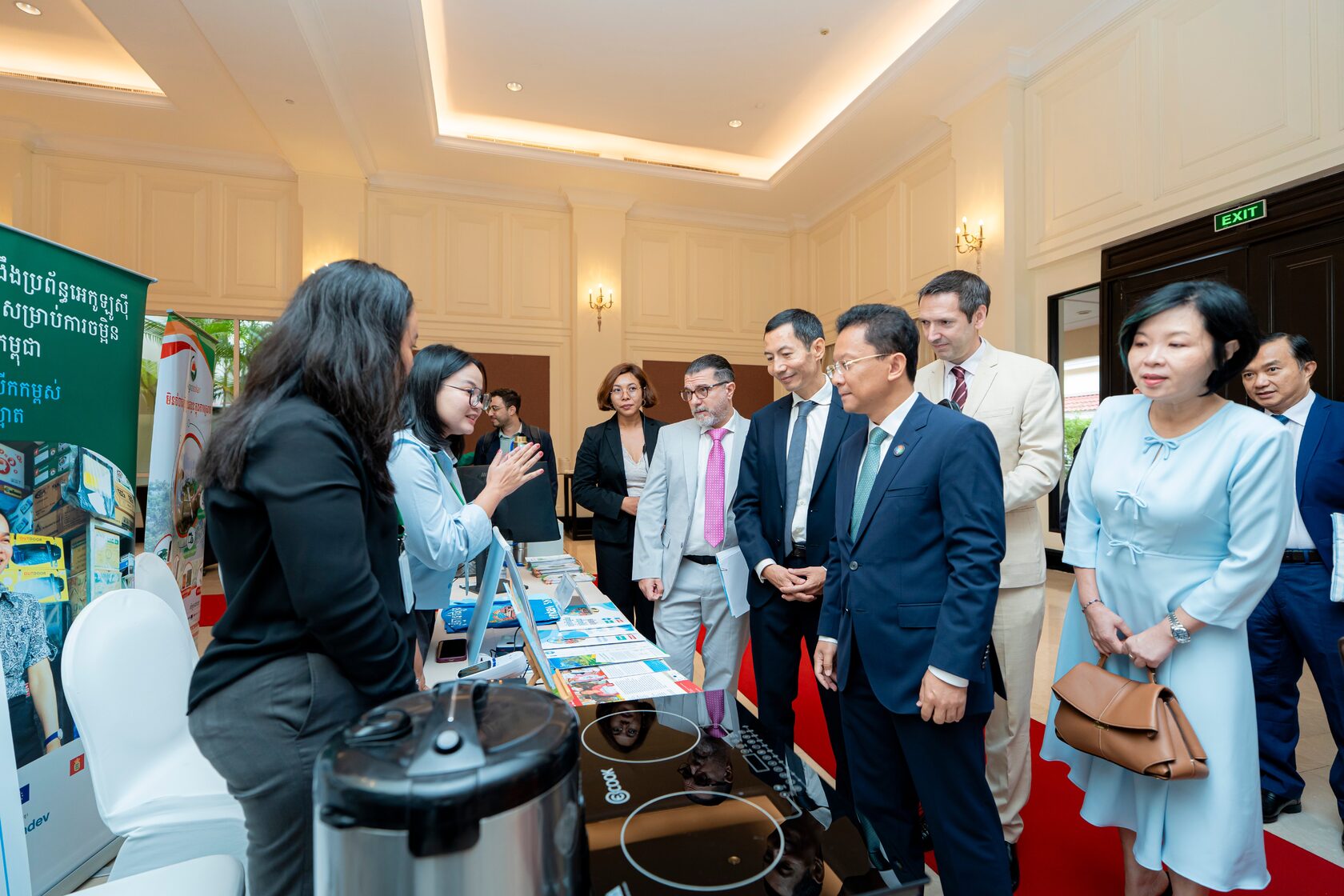
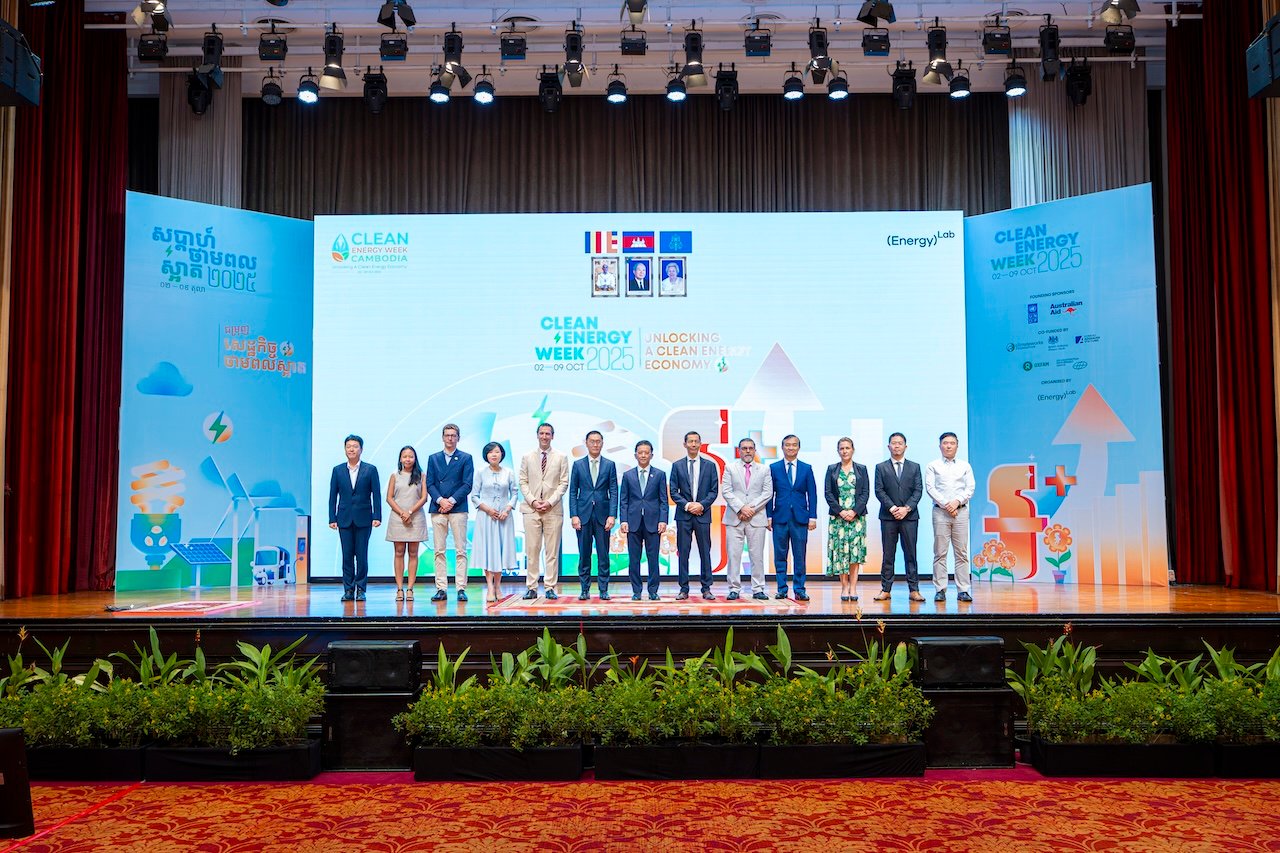
PHNOM PENH – Clean Energy Week returns for the eighth time, highlighting the crucial role of clean energy in securing Cambodia’s sustainable development. Held under the theme “Unlocking a Clean Energy Economy,” the week-long event from October 2 brings together stakeholders to discuss policy solutions and foster partnerships.
It focuses on critical issues in the country’s clean energy transition, such as developing clean energy skills and advancing women’s economic empowerment through a just energy transition.
Hem Vanndy, Minister of Industry, Science, Technology and Innovation, applauded the summit for bringing stakeholders together in a way that goes beyond dialogue to drive practical action and measurable impact.
“The summit’s theme sends a strong message, emphasizing that clean energy goals are not only about protecting the environment but represent a strategic pathway to safeguard our economy and secure Cambodia’s position in the global market,” Vanndy said.
“Clean energy is no longer just an option, it is a necessity. It holds the key to shaping our next chapter of growth, one defined not by how much we produce, but by how wisely and sustainably we create and use our resources.”
Australian Ambassador Derek Yip commended Cambodia’s progress in expanding access to electricity and exploring renewable energy options.
He noted that the country’s ambitious target of 70 percent renewable energy by 2030 provides a roadmap for building a sustainable and resilient economy.
“Through effective clean energy policies, Cambodia can bolster its growth by enhancing energy reliability, reducing costs, and drawing in responsible investments. These efforts will not only help tackle climate change but also provide access to international markets that are becoming more climate-conscious,” Yip said.
Natharoun Ngo Son, regional director for Energy & Economy at EnergyLab Asia, also praised Cambodia, not only as a major producer of renewable energy for local use but also for its clean energy target.
He is optimistic that a clean energy economy can deliver more jobs, more revenue, enhanced competitiveness and market access, while attracting quality foreign direct investments.
The summit is organized by EnergyLab Cambodia, in partnership with the Ministry of Mines and Energy, and in collaboration with co-founders, Australia and the United Nations Development Programme.
It aims to foster deep collaboration between development partners, government policymakers and the private sector while raising awareness of clean energy among a wider local audience.
The event will show how clean energy strengthens key industries, including garment production and tourism, while attracting investment in energy-intensive and clean technology sectors.
Achieving the clean energy transition
Acknowledging the importance of human resources, Vanndy said the country must invest in people as much as in technology. Engineers, technicians and energy managers were the backbone of the clean energy transition.
“We must also empower them with our collective commitment and contribution to research and development that will open new frontiers and possibilities. Additionally, we need strong public–private partnerships in which every stakeholder coordinates and plays a crucial role in the ecosystem.”
Enrico Gaveglia, UNDP Resident Representative, noted that Cambodia has abundant solar resources, a young workforce and robust regional networks.
He expressed optimism that the country can leapfrog into a clean energy future with the right policies and investments, while pledging UNDP’s support for the journey.
Recognizing Cambodia’s vision of graduating from Least Developed Country status by 2029, Gaveglia said the key challenge is sustaining progress while building resilience in a changing global economy.
He said energy lies at the heart of this challenge. While it drives emissions, it also holds the key to resilience, affordability, and energy security.
However, without universal access to clean, efficient, affordable and inclusive energy, he said Cambodia cannot achieve its development goals.
“Therefore, this national urgency echoes a global call. The UN Secretary-General reminds us that we must triple renewable capacity, double energy efficiency, and achieve universal access to clean energy by 2030,” Gaveglia said.
At the same time, Son advised that, since Cambodia is still in the early stages of unlocking its clean energy economy, it should prioritize three pillars to maximize its potential.
“The first pillar focuses on the nation’s electricity system transition to clean energy, including all the investments into efficient generation, transmission, and distribution technology, to make the transition safe and secure,” Son said.
“The second pillar leverages this clean energy system to accelerate the growth of existing industries and support the emergence of new ones. Cambodia can help investors meet international market requirements for low or zero-carbon products, using clean energy as a key market differentiator.”
He added that Cambodia could benefit by carving out a share of the rapidly growing clean energy manufacturing sector, including producing EVs, solar and wind technologies, battery energy storage systems, and other clean energy equipment.
-----
Article by: https://cambodianess.com
It focuses on critical issues in the country’s clean energy transition, such as developing clean energy skills and advancing women’s economic empowerment through a just energy transition.
Hem Vanndy, Minister of Industry, Science, Technology and Innovation, applauded the summit for bringing stakeholders together in a way that goes beyond dialogue to drive practical action and measurable impact.
“The summit’s theme sends a strong message, emphasizing that clean energy goals are not only about protecting the environment but represent a strategic pathway to safeguard our economy and secure Cambodia’s position in the global market,” Vanndy said.
“Clean energy is no longer just an option, it is a necessity. It holds the key to shaping our next chapter of growth, one defined not by how much we produce, but by how wisely and sustainably we create and use our resources.”
Australian Ambassador Derek Yip commended Cambodia’s progress in expanding access to electricity and exploring renewable energy options.
He noted that the country’s ambitious target of 70 percent renewable energy by 2030 provides a roadmap for building a sustainable and resilient economy.
“Through effective clean energy policies, Cambodia can bolster its growth by enhancing energy reliability, reducing costs, and drawing in responsible investments. These efforts will not only help tackle climate change but also provide access to international markets that are becoming more climate-conscious,” Yip said.
Natharoun Ngo Son, regional director for Energy & Economy at EnergyLab Asia, also praised Cambodia, not only as a major producer of renewable energy for local use but also for its clean energy target.
He is optimistic that a clean energy economy can deliver more jobs, more revenue, enhanced competitiveness and market access, while attracting quality foreign direct investments.
The summit is organized by EnergyLab Cambodia, in partnership with the Ministry of Mines and Energy, and in collaboration with co-founders, Australia and the United Nations Development Programme.
It aims to foster deep collaboration between development partners, government policymakers and the private sector while raising awareness of clean energy among a wider local audience.
The event will show how clean energy strengthens key industries, including garment production and tourism, while attracting investment in energy-intensive and clean technology sectors.
Achieving the clean energy transition
Acknowledging the importance of human resources, Vanndy said the country must invest in people as much as in technology. Engineers, technicians and energy managers were the backbone of the clean energy transition.
“We must also empower them with our collective commitment and contribution to research and development that will open new frontiers and possibilities. Additionally, we need strong public–private partnerships in which every stakeholder coordinates and plays a crucial role in the ecosystem.”
Enrico Gaveglia, UNDP Resident Representative, noted that Cambodia has abundant solar resources, a young workforce and robust regional networks.
He expressed optimism that the country can leapfrog into a clean energy future with the right policies and investments, while pledging UNDP’s support for the journey.
Recognizing Cambodia’s vision of graduating from Least Developed Country status by 2029, Gaveglia said the key challenge is sustaining progress while building resilience in a changing global economy.
He said energy lies at the heart of this challenge. While it drives emissions, it also holds the key to resilience, affordability, and energy security.
However, without universal access to clean, efficient, affordable and inclusive energy, he said Cambodia cannot achieve its development goals.
“Therefore, this national urgency echoes a global call. The UN Secretary-General reminds us that we must triple renewable capacity, double energy efficiency, and achieve universal access to clean energy by 2030,” Gaveglia said.
At the same time, Son advised that, since Cambodia is still in the early stages of unlocking its clean energy economy, it should prioritize three pillars to maximize its potential.
“The first pillar focuses on the nation’s electricity system transition to clean energy, including all the investments into efficient generation, transmission, and distribution technology, to make the transition safe and secure,” Son said.
“The second pillar leverages this clean energy system to accelerate the growth of existing industries and support the emergence of new ones. Cambodia can help investors meet international market requirements for low or zero-carbon products, using clean energy as a key market differentiator.”
He added that Cambodia could benefit by carving out a share of the rapidly growing clean energy manufacturing sector, including producing EVs, solar and wind technologies, battery energy storage systems, and other clean energy equipment.
-----
Article by: https://cambodianess.com