Clean Energy Week 2025 pushed four powerful student-made documentaries to the forefront, capturing how renewable energy is transforming lives across Cambodia’s informal economy, agriculture, education and faith communities.
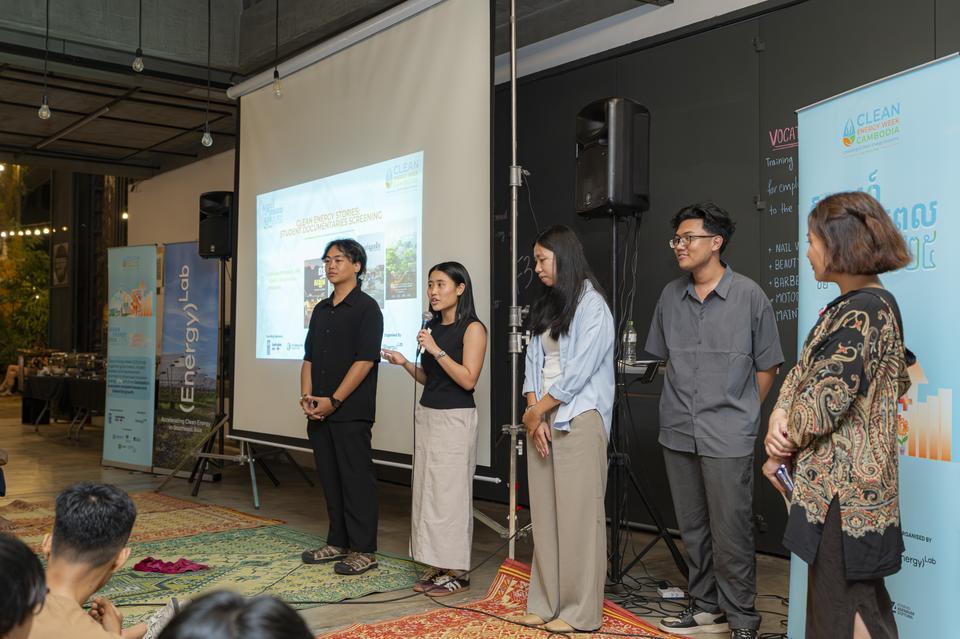
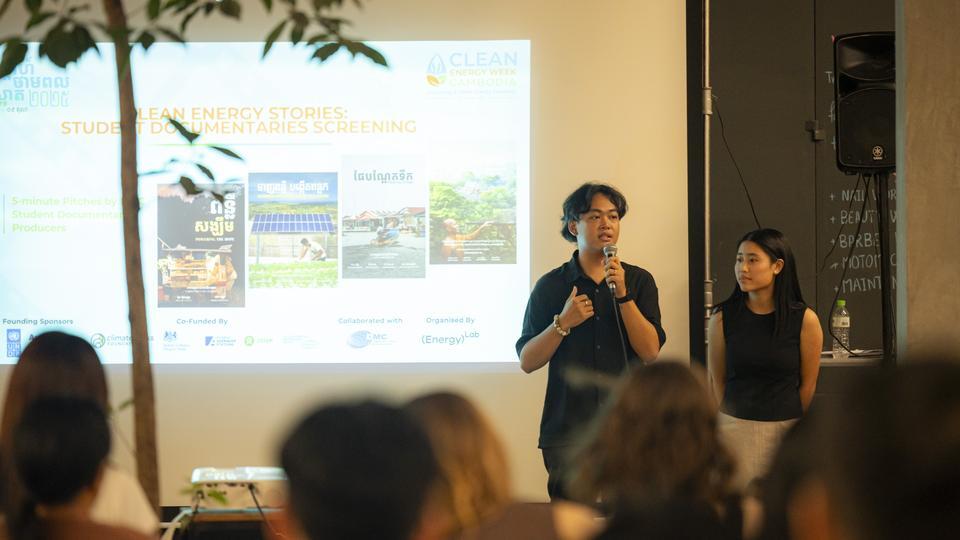
This year’s Clean Energy Week agenda introduced a compelling visual storytelling event, ‘Clean Energy Stories: Student Documentaries Screening’, which showcased Cambodia’s evolving energy landscape through short documentaries created by Department of Media and Communication (DMC) students.
Four documentaries were screened during the event at F3 - Future Friends Factory on October 4, offering an intimate look at how clean energy is reshaping lives across the country and integrating change into the informal economy.
From floating villages powered by solar panels to hydroponic farms thriving on renewable electricity, the documentaries highlight both the triumphs and ongoing challenges in the country’s transition to sustainable energy.
The screening brought together residents from across Phnom Penh to highlight current issues in the energy sector while promoting sustainable development, renewable energy and advocating for climate action via compelling visual storytelling.
In his documentary ‘Powering the Hope’, producer Ouk Bunleng spotlights a street food vendor who uses solar-powered lighting to extend her business hours and support her family, turning night into opportunity.
He believes in the impact benefit of smaller-scale businesses using renewable energy to boost the informal economy in the country. “I think the impact of solar panels is the impact of smaller-scale and grassroots people,” he said.
“I think this may not be seen at first glance, but if you look at a smaller scale, just two lights of solar panels, she is able to support the family and their lives.”
Another short film producer, Tang Porgech, showcased ‘Absorb the Light, Arise the Grow’, which tells the story of Rom Sari, a farmer in Siem Reap who overcame unstable electricity and high costs by switching to solar energy to sustain his hydroponic farm.
She believes that agriculture plays an important role, as it is the backbone of the country's economy, and is a driver in the renewable energy sector. “I think that farmers rely on energy, not just for their farm but also for their livelihoods too.”
Another factor that inspired Porgech to pick Sari was his concern for food security and healthy consumers. "He grows his cabbage hydroponically because he wants to protect our health. He grows in the water; it protects vegetables from the insects.”
Elsewhere, documentary ‘Floating Village’ captures the resilience of fishing families and a lakeside school that relies on solar power to survive and educate.
“We want to shape lives in the village and community there, where there is still limited access to electricity. In addition, they don't have electricity from the national grid. They used an oil lamp and battery, and now they use solar power to get access to electricity,” said San Borey Roth, group representative of floating village documentaries.
‘Eco Faith’, produced by Duong Pisith, depicts Venerable Im Teang, a monk who chose solar energy to power Wat Seri Sakor Daun, inspiring environmental awareness and community action.
This year’s Clean Energy Week agenda introduced a compelling visual storytelling event, ‘Clean Energy Stories: Student Documentaries Screening’, which showcased Cambodia’s evolving energy landscape through short documentaries created by Department of Media and Communication (DMC) students.
Four documentaries were screened during the event at F3 - Future Friends Factory on October 4, offering an intimate look at how clean energy is reshaping lives across the country and integrating change into the informal economy.
From floating villages powered by solar panels to hydroponic farms thriving on renewable electricity, the documentaries highlight both the triumphs and ongoing challenges in the country’s transition to sustainable energy.
The screening brought together residents from across Phnom Penh to highlight current issues in the energy sector while promoting sustainable development, renewable energy and advocating for climate action via compelling visual storytelling.
In his documentary ‘Powering the Hope’, producer Ouk Bunleng spotlights a street food vendor who uses solar-powered lighting to extend her business hours and support her family, turning night into opportunity.
He believes in the impact benefit of smaller-scale businesses using renewable energy to boost the informal economy in the country. “I think the impact of solar panels is the impact of smaller-scale and grassroots people,” he said.
“I think this may not be seen at first glance, but if you look at a smaller scale, just two lights of solar panels, she is able to support the family and their lives.”
Another short film producer, Tang Porgech, showcased ‘Absorb the Light, Arise the Grow’, which tells the story of Rom Sari, a farmer in Siem Reap who overcame unstable electricity and high costs by switching to solar energy to sustain his hydroponic farm.
She believes that agriculture plays an important role, as it is the backbone of the country's economy, and is a driver in the renewable energy sector. “I think that farmers rely on energy, not just for their farm but also for their livelihoods too.”
Another factor that inspired Porgech to pick Sari was his concern for food security and healthy consumers. "He grows his cabbage hydroponically because he wants to protect our health. He grows in the water; it protects vegetables from the insects.”
Elsewhere, documentary ‘Floating Village’ captures the resilience of fishing families and a lakeside school that relies on solar power to survive and educate.
“We want to shape lives in the village and community there, where there is still limited access to electricity. In addition, they don't have electricity from the national grid. They used an oil lamp and battery, and now they use solar power to get access to electricity,” said San Borey Roth, group representative of floating village documentaries.
‘Eco Faith’, produced by Duong Pisith, depicts Venerable Im Teang, a monk who chose solar energy to power Wat Seri Sakor Daun, inspiring environmental awareness and community action.